3D Scanning & Reverse Engineering: How We Recreate Parts Without Original Drawings
Every manufacturer dreads the same scenario. A critical component fails. Production halts. You reach for the original drawings — only to find they no longer exist. The original supplier is gone. The machine is decades old. And every hour of downtime is costing you money.
This is not a rare situation. It happens across industries in Singapore every day — from MRO workshops and automotive tuning shops to healthcare facilities and heritage restoration teams. The question is: how do you recreate a part that has no documentation?
The answer is 3D scanning and reverse engineering — and it is exactly what we do at 3D Specialist.
What Is Reverse Engineering, and Why Does It Matter?
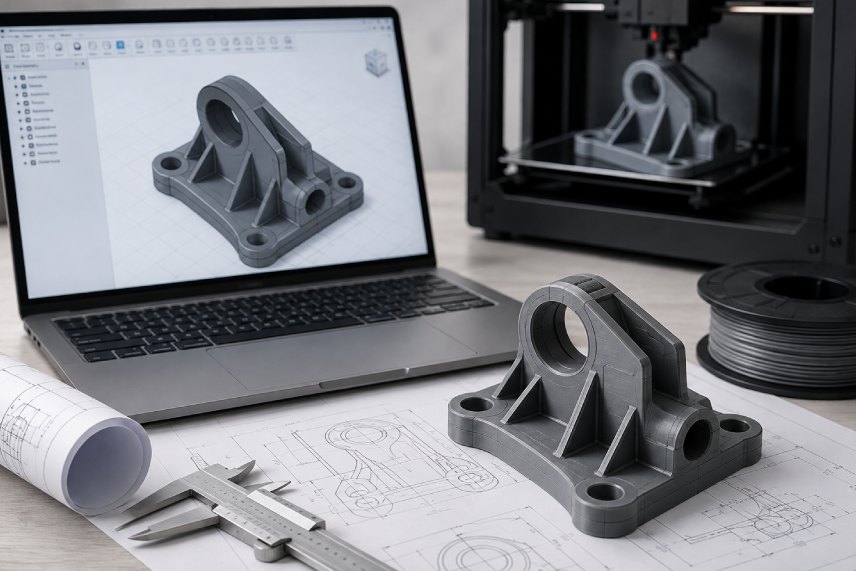
Reverse engineering is the process of working backwards from a physical object to understand and recreate its design. Instead of starting with drawings and building a part, you start with the part and extract the drawings.
Traditionally, this involved manual measurement — calipers, gauges, templates, and a great deal of guesswork for complex curved surfaces. The results were imprecise, time-consuming, and prone to errors that only showed up during assembly or testing.
Today, 3D scanning has transformed reverse engineering into a fast, accurate, and repeatable process. A physical component — no matter how complex — can be digitised into a precise 3D model within hours. That model can then be used to reproduce the part using 3D printing, CNC machining, mold casting, or any other suitable manufacturing method.
For businesses in Singapore, this capability is not just convenient — it is a competitive advantage.
How We Do It: Our 3-Step Process
At 3D Specialist, our reverse engineering workflow is straightforward and built around accuracy at every stage.
Step 1 — Scan the Object
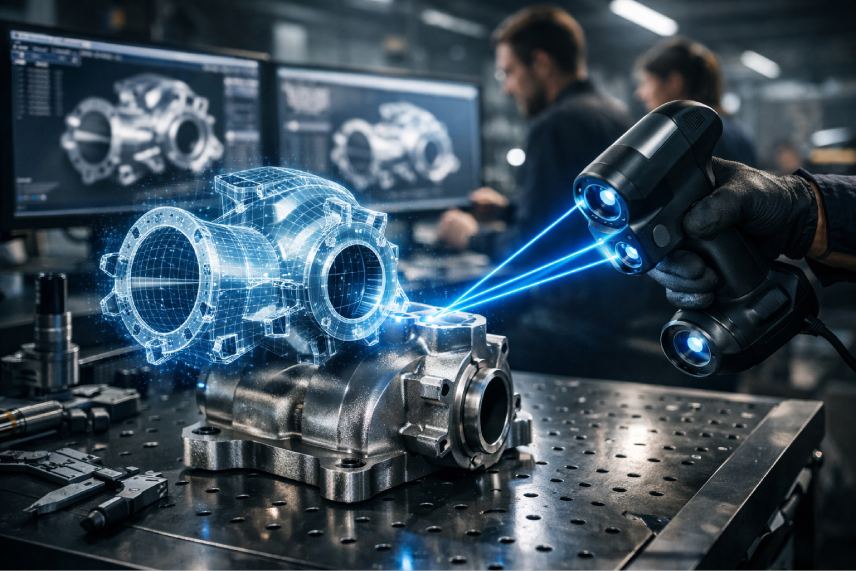
We use the 3D portable scanner to capture the physical component in full three-dimensional detail. The Peel 3D scanner is known for its precision and flexibility — it can handle complex geometries, curved surfaces, undercuts, and parts of varying sizes without requiring a fixed scanning environment.
The portability of our 3D scanner also means we can bring the equipment to your facility when the part cannot easily be transported. Whether it is a large industrial component or a delicate medical device, our scanning process captures every surface accurately.
Step 2 — Process and Finalise the Mesh
Raw scan data is not immediately ready for use. Our team cleans, aligns, and refines the mesh using professional reverse engineering software. Noise is removed. Gaps are filled. Surfaces are smoothed and validated to ensure dimensional accuracy.
The result is a clean, high-resolution 3D mesh that faithfully represents the original physical part — including tolerances, radii, and interface geometries that manual measurement would struggle to capture reliably.
Step 3 — Export for Manufacturing
Once the mesh is finalised, we export it in the format best suited to the next manufacturing step. Common export formats include STL, STEP, IGES, and OBJ — all widely compatible with 3D printing software, CAD platforms, and CNC machining systems.
At this stage, the part exists as a precise digital asset. It can be reproduced immediately, archived for future use, modified for design improvements, or shared with other manufacturing partners.
Who Needs Reverse Engineering? Real Applications We Handle
One of the reasons reverse engineering is so valuable is its versatility. At 3D Specialist, we apply this capability across a wide range of industries and use cases.
MRO and Engineering Maintenance, repair, and operations teams frequently encounter legacy components with no available drawings. Reverse engineering allows exact reproductions to be manufactured on demand — eliminating the need for expensive custom orders or waiting on overseas supply chains.
Automotive — Aftermarket and Tuning EV conversions, high-performance modifications, and vehicle restorations often require custom brackets, housings, and retrofit components that were never commercially produced. By scanning existing structures — chassis rails, engine bays, interior panels — we can design and manufacture parts that fit precisely without any guesswork.
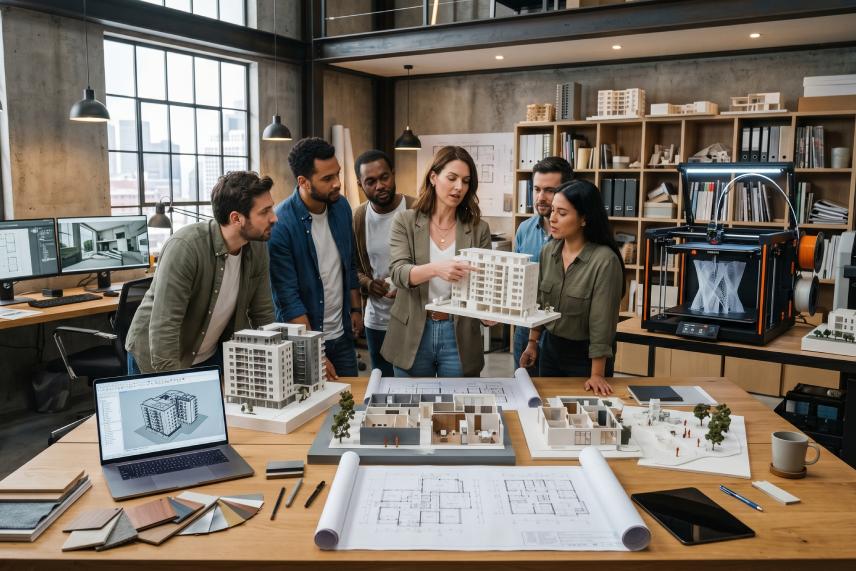
Product Design Designers working from physical prototypes, clay models, or handmade samples can convert their work into digital CAD files using 3D scanning. This bridges the gap between physical creativity and digital manufacturing.
Healthcare orthodontic, prosthetics, cranial scanning, and custom mobility aids all require an exact fit to the patient's body. 3D scanning allows highly personalised medical devices to be designed and produced with precision that is simply not achievable through manual measurement.
Heritage Preservation and Art Museums, restoration teams, and cultural organisations use 3D scanning to create permanent digital archives of artefacts, sculptures, and heritage structures. These digital records can be used for research, reproduction, or restoration long after the original is damaged or lost.
AR, VR and Digital Content Product visualisations, SFX production, NFT creation, and virtual environments all require accurate 3D models of real-world objects. Scanning physical items is often faster and more accurate than building models entirely from scratch in software.
The Practical Advantage: No Drawings Required
What sets 3D scanning apart from traditional reverse engineering methods is the ability to work without any documentation at all. There is no need for original CAD files, technical drawings, or part numbers. If the physical component exists, we can scan it.
This matters enormously for:
- Discontinued parts that are no longer available from original suppliers
- Legacy machinery still in active use but with no surviving documentation
- Custom or handmade components that were never formally documented
- Imported equipment where original drawings are held overseas or unavailable
- Post-failure analysis where understanding the original geometry is needed for redesign
In every one of these scenarios, a physical scan becomes the starting point for an accurate reproduction.
From Scan to Production: The Full Workflow
What makes 3D Specialist particularly well-positioned for reverse engineering work is that we offer the complete manufacturing chain under one roof. Once a scan is processed and a digital model is ready, we can move directly into production.
Depending on the part requirements, we can produce the reproduced component using:
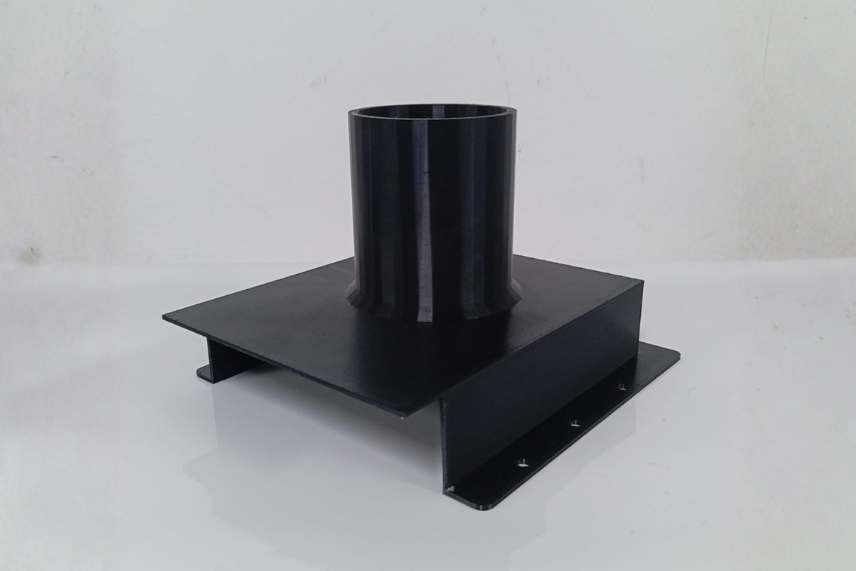
- FDM or SLA 3D printing for rapid, cost-effective reproductions in functional plastics and resins
- CNC machining for metal parts requiring high dimensional tolerances
- Mold design and casting for high-volume production of reverse-engineered components
- Post-processing and finishing including electroplating, sanding, and painting for a professional final result
This means the reverse engineering process does not end with a digital file — it ends with a finished, functional part in your hands.
A Note on Accuracy
Reverse engineering is only as good as the scanning process behind it. Inaccurate scans produce inaccurate parts — and inaccurate parts can fail in assembly, cause safety issues, or simply not perform as required.
The 3D scanner we use is designed specifically for industrial and professional applications, delivering measurement accuracy suited to demanding engineering environments. Combined with our experienced team and professional mesh processing workflow, the models we produce are built for real manufacturing — not just visualisation.
Why Work With 3D Specialist?
At 3D Specialist, we are a Singapore-based advanced manufacturing company focused on solving real engineering problems — not just offering off-the-shelf services. Our team works closely with clients to understand what the part needs to do, how it fits within the larger system, and what the best manufacturing route is once the scan is complete.
We handle urgent one-off requests as well as ongoing reverse engineering programmes for clients who regularly need legacy parts reproduced. Our expertise in both scanning and manufacturing means you get consistent results from a single reliable partner.
If you have a part that needs to be reproduced — and no drawings to start from — we can help.
Ready to Recreate Your Part?
Contact 3D Specialist today to discuss your reverse engineering requirements. Whether it is a failed industrial component, a legacy automotive part, or a custom piece with no documentation, our team is ready to bring it back to life — accurately, efficiently, and without the delays of traditional methods.