FDM vs SLA vs SLS: Which 3D Printing Technology Is Right for Your Singapore Business?
Whether you're a product designer in one-north, an engineer in Jurong, or a startup founder prototyping your next big idea, at some point, you'll ask the same question every business asks before investing in 3D printing:
"Which technology is actually right for us?"
FDM, SLA, and SLS are the three most widely used 3D printing technologies in Singapore today. Each has its strengths, its trade-offs, and its sweet spot. Choosing the wrong one doesn't just cost money — it can slow down your product development cycle, compromise part quality, or leave you with a machine that's too complex for your team to operate.
This guide breaks it all down, clearly and honestly, so you can make the right call for your business.
A Quick Overview: What Are FDM, SLA, and SLS?
Before diving into comparisons, here's the short version of each technology:
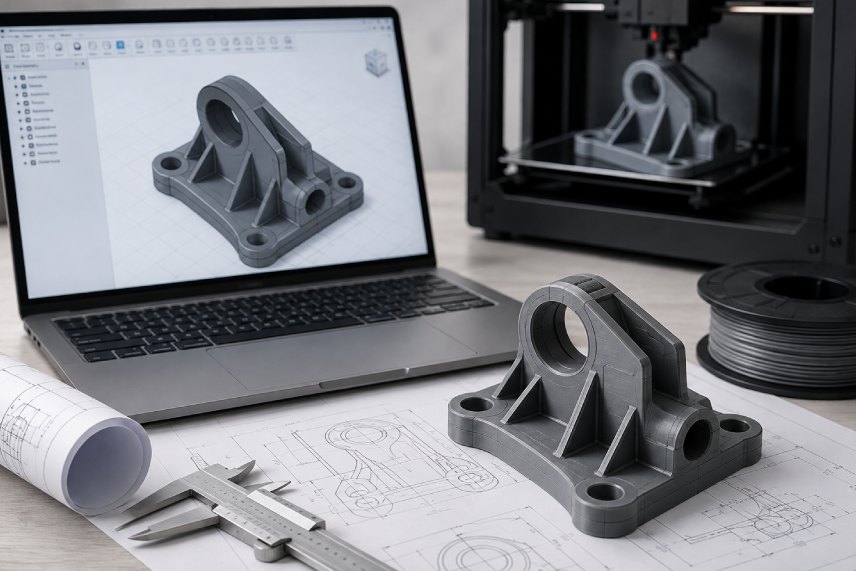
FDM (Fused Deposition Modelling) works by melting thermoplastic filament and depositing it layer by layer to build a part. It's the most common and accessible form of 3D printing — what most people picture when they hear "3D printer."
SLA (Stereolithography) uses a UV laser to cure liquid resin, layer by layer, producing parts with exceptionally smooth surfaces and fine detail. It's the go-to technology when aesthetics and precision matter.
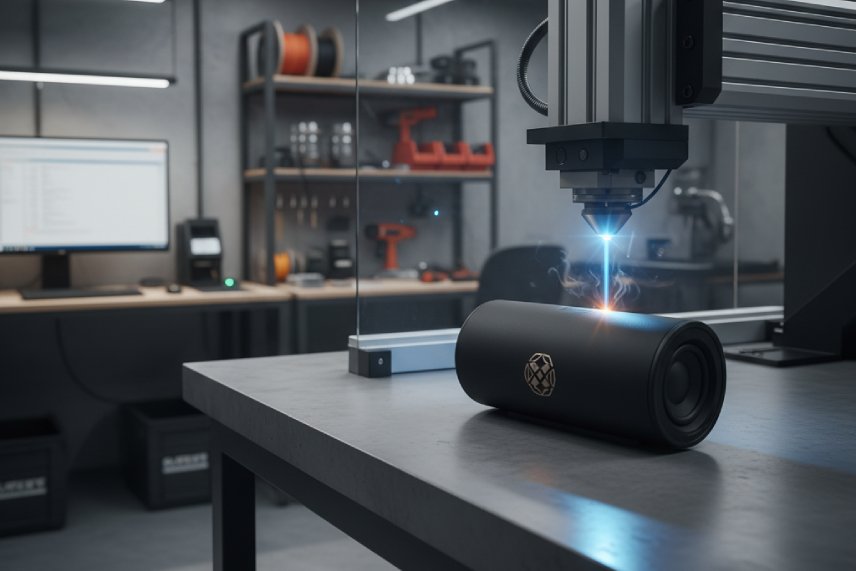
SLS (Selective Laser Sintering) uses a high-powered laser to fuse powdered nylon or other materials together. It produces strong, functional parts without any support structures — and is one of the most capable technologies for end-use parts and complex geometries.
FDM: The Workhorse of the Workshop
How It Works
A spool of thermoplastic filament (PLA, ABS, PETG, TPU, and more) is fed into a heated nozzle, melted, and extruded in precise paths to build a part from the bottom up. Each layer bonds to the one below it as it cools.
Best For
- Rapid concept prototyping and iterative design
- Jigs, fixtures, and internal tooling
- Large-format parts where surface finish isn't critical
- Education, R&D labs, and maker environments
- Businesses on a budget are just getting started with 3D printing.
Pros
- Most affordable — both the machines and the materials
- Wide material selection — from basic PLA to engineering-grade nylon and carbon-fibre composites
- Easy to operate — minimal post-processing for basic prints
- Large build volumes are available on industrial machines
- Fastest turnaround for simple geometries
Cons
- Layer lines are visible — surface finish is the weakest of the three technologies.
- Anisotropic strength — parts are weaker along the Z-axis (layer direction)
- Support structures are required for overhangs, which need to be removed manually.
- Lower dimensional accuracy compared to SLA and SLS
- Limited for fine detail — thin walls and intricate features can be difficult.
Typical Materials
PLA, ABS, PETG, TPU, Nylon, PC, ASA, Carbon Fibre-filled composites
Right For You If...
You need fast, affordable prototypes for form and fit testing, or you need functional tooling for your production floor. FDM is the starting point for most Singapore businesses new to 3D printing.
SLA: When Precision and Aesthetics Matter
How It Works
A UV laser traces each layer onto a vat of photosensitive liquid resin, curing it into solid material. Parts are built upside down, pulled out of the resin vat layer by layer. After printing, parts require washing (in IPA) and UV post-curing to achieve full strength.
Best For
- High-detail product prototypes for client presentations
- Dental and medical models
- Jewellery patterns and investment casting
- Consumer electronics mockups
- Parts requiring tight tolerances and smooth surfaces
Pros
- Outstanding surface finish — layers as thin as 25 microns are possible
- Excellent dimensional accuracy — ideal for tight tolerances
- Captures fine detail that FDM cannot replicate
- Wide resin variety — standard, tough, flexible, castable, dental, and engineering resins available
- Smooth enough to paint and finish without extensive sanding
Cons
- More fragile than FDM or SLS — standard resins can be brittle
- Requires post-processing — washing and UV curing add time to the workflow
- Resin can be hazardous — requires PPE and proper ventilation
- Smaller build volumes on most machines
- Higher material cost than FDM filaments
- UV sensitivity — parts can degrade with prolonged sunlight exposure
Typical Materials
Standard resins, Tough/ABS-like resins, Flexible/Rubber-like resins, Castable resins, High-temp resins, Dental resins
Right For You If...
You're in product design, dental, jewellery, or any field where your prototype needs to look and feel like the final product. SLA is the right choice when a client needs to hold something that looks production-ready.
SLS: The Professional's Choice for Functional Parts
How It Works
A high-powered laser selectively sinters (fuses) powdered material — typically nylon (PA12 or PA11) — layer by layer. Unlike FDM and SLA, SLS doesn't require support structures because the unsintered powder itself supports the part during printing.
Best For
- Functional end-use parts
- Complex geometries and interlocking assemblies
- Low-volume production runs
- Aerospace, automotive, and industrial components
- Wearable devices and consumer goods
Pros
- No support structures needed — enables highly complex geometries
- Strong, isotropic parts — mechanical properties are consistent in all directions
- Excellent for functional testing — parts behave closer to injection-moulded components
- Nylon is tough, flexible, and chemical-resistant
- Multiple parts can be packed into one build — high efficiency for batch runs
- Best technology for complex internal channels and assemblies
Cons
- Highest machine cost — industrial SLS printers start from SGD 50,000+
- Grainy surface texture — parts feel slightly sandy compared to SLA
- Powder handling is messy — requires dedicated space and safety protocols.
- Longer post-processing — depowdering, bead blasting, and dyeing
- Material waste — unused powder can sometimes be recycled but degrades over time
- Longer print times for some geometries
Typical Materials
Nylon PA12 (most common), Nylon PA11, Glass-filled Nylon, Flexible TPU, Alumide (nylon + aluminium powder)
Right For You If...
You need functional, durable parts that can go straight into testing or limited production. SLS is the technology of choice for engineering firms, product manufacturers, and companies that need geometries impossible to achieve with FDM or SLA.
Side-by-Side Comparison
|
Surface Finish |
Rough (visible layers) | Excellent (smooth) | Moderate (grainy) |
|
Accuracy |
Moderate | High | High |
|
Part Strength |
Moderate (anisotropic) | Moderate (brittle) | High (isotropic) |
|
Material Range |
Very Wide | Wide | Moderate |
|
Support Structures |
Required | Required | Not Required |
|
Post-Processing |
Minimal | Washing + UV cure | Depowdering + blasting |
|
Speed (small parts) |
Fast | Moderate | Moderate |
|
Machine Cost |
Low–Medium | Low–High | High |
|
Material Cost |
Low | Medium | Medium–High |
|
Best Use Case |
Prototyping, tooling | Detailed prototypes, dental | Functional parts, production |
Which Technology Is Right for Your Singapore Business?
There's no single answer — it comes down to what you're making, what you need from the part, and your budget. Here's a quick decision guide:
Choose FDM if:
- You need fast, affordable concept models or functional prototypes.
- You're building jigs, fixtures, or internal tooling.
- Your team is new to 3D printing and needs a forgiving, easy-to-use platform.
- You work with engineering materials like Nylon or PETG.
Choose SLA if:
- Your prototype needs to look like a finished product.
- You work in dental, jewellery, or consumer electronics.
- Dimensional accuracy and fine detail are non-negotiable.
- You're creating masters for silicone moulding or investment casting.
Choose SLS if:
- Your parts need to be mechanically functional and durable.
- You're designing complex geometries with internal features.
- You want to skip support structures and post-processing headaches.
- You're running small production batches alongside prototyping.
Need more than one? Many Singapore businesses use a combination — FDM for early-stage concept models, SLA for high-detail presentation prototypes, and SLS for functional testing and small-batch production. This multi-technology approach gives you the most flexibility across your product development cycle.
How 3D Specialist Can Help
Choosing the right 3D printing technology is just the first step. At 3D Specialist, we help Singapore businesses:
- Select and purchase the right 3D printer for their specific applications and budgets — from personal desktop units to full industrial systems.
- Access professional 3D printing services when you need parts printed on technology you don't own in-house.
- Train your team on hardware and design best practices.
- Provide ongoing support and maintenance so your machines keep running at their best
Whether you're exploring 3D printing for the first time or looking to upgrade your current setup, our team is here to guide you.